








Rock wool panel technology from VIKKINS has been deployed across some of Africa's most demanding industrial environments — most recently as the building envelope for the MANGAL Group's 50MW captive power plant in Kogi State, Nigeria, commissioned in September 2024..
Project Overview: The MIL Kogi 50MW Captive Power Plant
The MANGAL Industries Limited (MIL) Kogi Project Captive Power Plant (CPP) is a 50-megawatt self-sufficient power generation facility located in Kogi State, north-central Nigeria. Developed by the MANGAL Group and engineered by Sinoma International Engineering Co., Ltd. — a world-leading EPC (Engineering, Procurement, and Construction) contractor — the plant is designed to provide a reliable, dedicated power supply to the group’s industrial operations in the region.
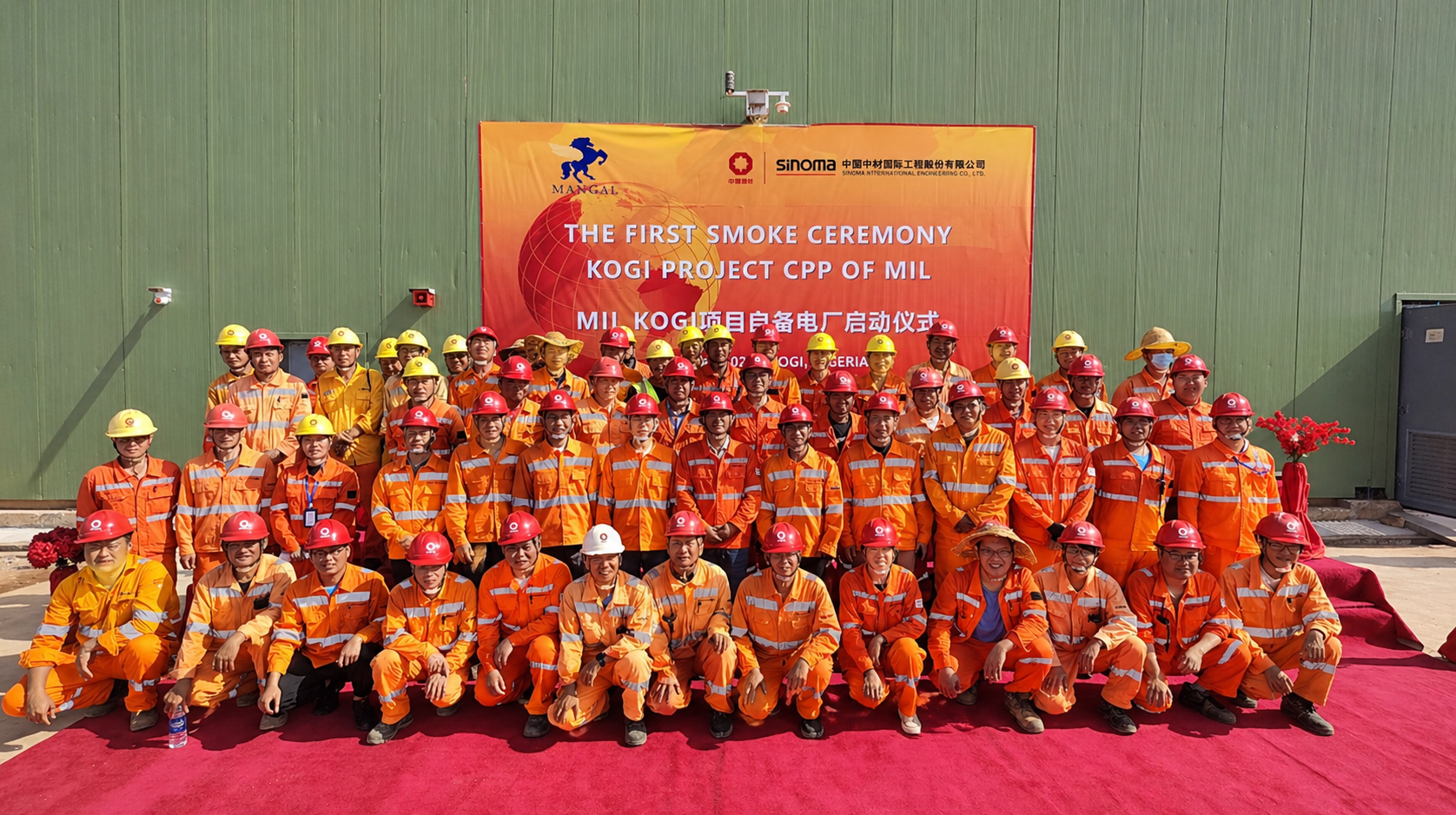
The project reached a major milestone with its First Smoke Ceremony , a formal commissioning rite marking the successful first-run of the power generation units. This ceremony, attended by Chinese and Nigerian project teams alongside local dignitaries, symbolized the plant’s readiness to deliver stable industrial power.
Inside the Plant: Multi-Unit Gas Generator Configuration
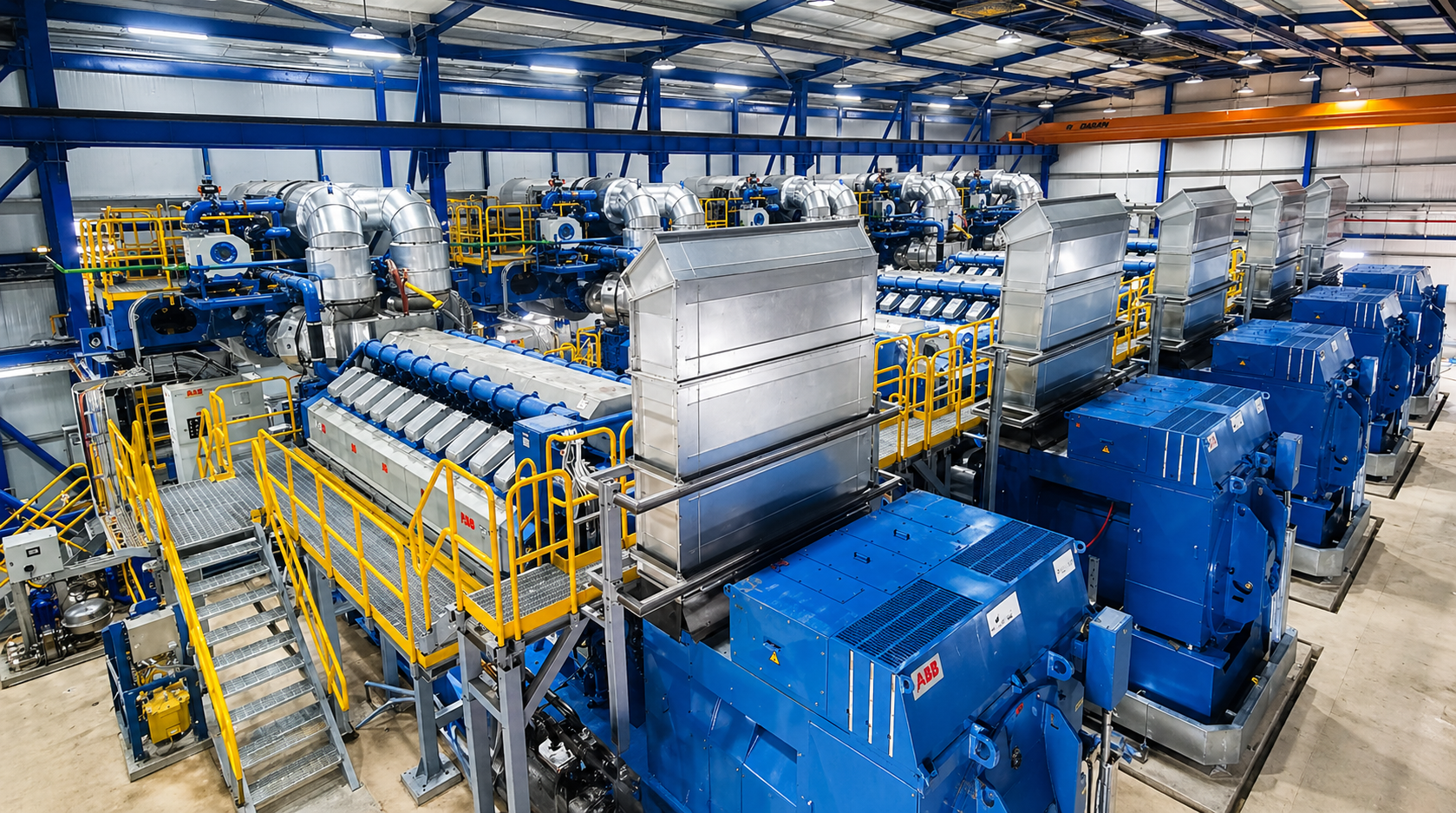
The power house interior features a parallel array of large-bore reciprocating gas generator sets equipped with ABB turbochargers and ABB alternators. The blue-painted engine units — arranged in multiple rows within a single long-span steel-framed hall — are interconnected by an elaborate network of stainless steel intake and exhaust ducts, yellow-railed service walkways, and gantry cranes for maintenance access.
This type of distributed multi-unit CPP configuration is increasingly favored in sub-Saharan Africa for its modularity and redundancy: individual generating sets can be taken offline for maintenance without interrupting total plant output, ensuring stable power delivery to critical manufacturing processes.
Plant Technical Snapshot
| Installed Capacity | 50 MW |
|---|---|
| Plant Type | Captive Power Plant (CPP) |
| Prime Mover | Gas Reciprocating Engines |
| Alternator | ABB |
| EPC Contractor | Sinoma International Engineering |
| Client | MANGAL Group (MIL) |
| Location | Kogi State, Nigeria |
| Commissioning | September 2024 |
The Building Envelope Solution
For the external cladding and roofing envelope of the power house and auxiliary structures, Sinoma International Engineering specified VIKKINS prefabricated steel building panels with a hidden-joint rock wool composite construction. Manufactured to precise tolerances under factory-controlled conditions, each panel arrives on site as a finished, ready-to-install unit — eliminating the need for multi-trade sequencing of frame, insulation, and cladding that conventional site-built envelope systems require.
For a project of this scale in a remote inland location like Kogi State, this prefabricated approach delivered a decisive advantage: the building envelope was erected in a fraction of the time a traditional system would demand, keeping the overall EPC programme on schedule and reducing on-site labour dependencies — a critical consideration in environments where skilled cladding trades are scarce.
VIKKINS Rock Wool Panel Specifications — As Supplied to Kogi CPP
| Product Series | Hidden-Joint Rock Wool Composite |
|---|---|
| Core Insulation | Rock Wool (Stone Wool) |
| Panel Thickness | 100 mm |
| Steel Skin (Both Faces) | 0.8 mm |
| Joint Type | Concealed / Hidden Fastener |
| Application | Wall Cladding & Roof |
Why Rock Wool Composite Panels for Industrial Power Plants?
Understanding the choice of panel system requires a brief look at what these panels actually do — and why they matter particularly in tropical industrial environments.
Rock wool (stone wool) insulation is produced by melting volcanic basalt rock and spinning it into fine mineral fibers. The resulting material is non-combustible (classified A1 or A2 fire reaction class under EN 13501-1), thermally insulating, and highly resistant to moisture. In a power plant context — where generators operate continuously, ambient temperatures in West Africa can exceed 40°C, and fire risk from fuel is a constant consideration — the fire-resistance properties of rock wool are a primary engineering requirement.
The sandwich panel construction bonds the rock wool core between two profiled steel sheets under controlled factory conditions, producing a rigid, self-supporting structural panel. This factory-controlled manufacturing process ensures consistent density, bonding strength, and thermal performance — qualities that are difficult to replicate with site-assembled insulation and cladding systems.
In a power plant operating context, the thermal performance of a power plant insulated wall panel has a direct impact on operational costs. A well-insulated building envelope significantly reduces the heat load on the facility’s HVAC and ventilation systems — which must maintain safe operating temperatures for sensitive generator control equipment, electrical switchgear, and instrumentation. In Kogi State, where outdoor temperatures regularly exceed 38°C, a 100mm rock wool panel with high R-value means less cooling energy consumed, lower auxiliary power draw, and a more stable internal environment for critical machinery — translating into measurable long-term operational savings.
The hidden-joint (concealed-fastener) profile offers additional advantages in corrosive tropical environments: by concealing the mechanical fixing points within the panel joint, the system eliminates exposed fastener heads — common entry points for moisture ingress and subsequent corrosion. The result is a cleaner, more durable façade with a longer service life between maintenance cycles, a critical consideration for remote industrial sites in Africa where on-site maintenance resources are limited.
“The success of the Kogi CPP project demonstrates that high-performance building envelope technology manufactured in China can travel seamlessly to the most demanding industrial environments on the African continent.”
Across all these criteria, a high-performance rock wool panel delivers where conventional site-built systems cannot.
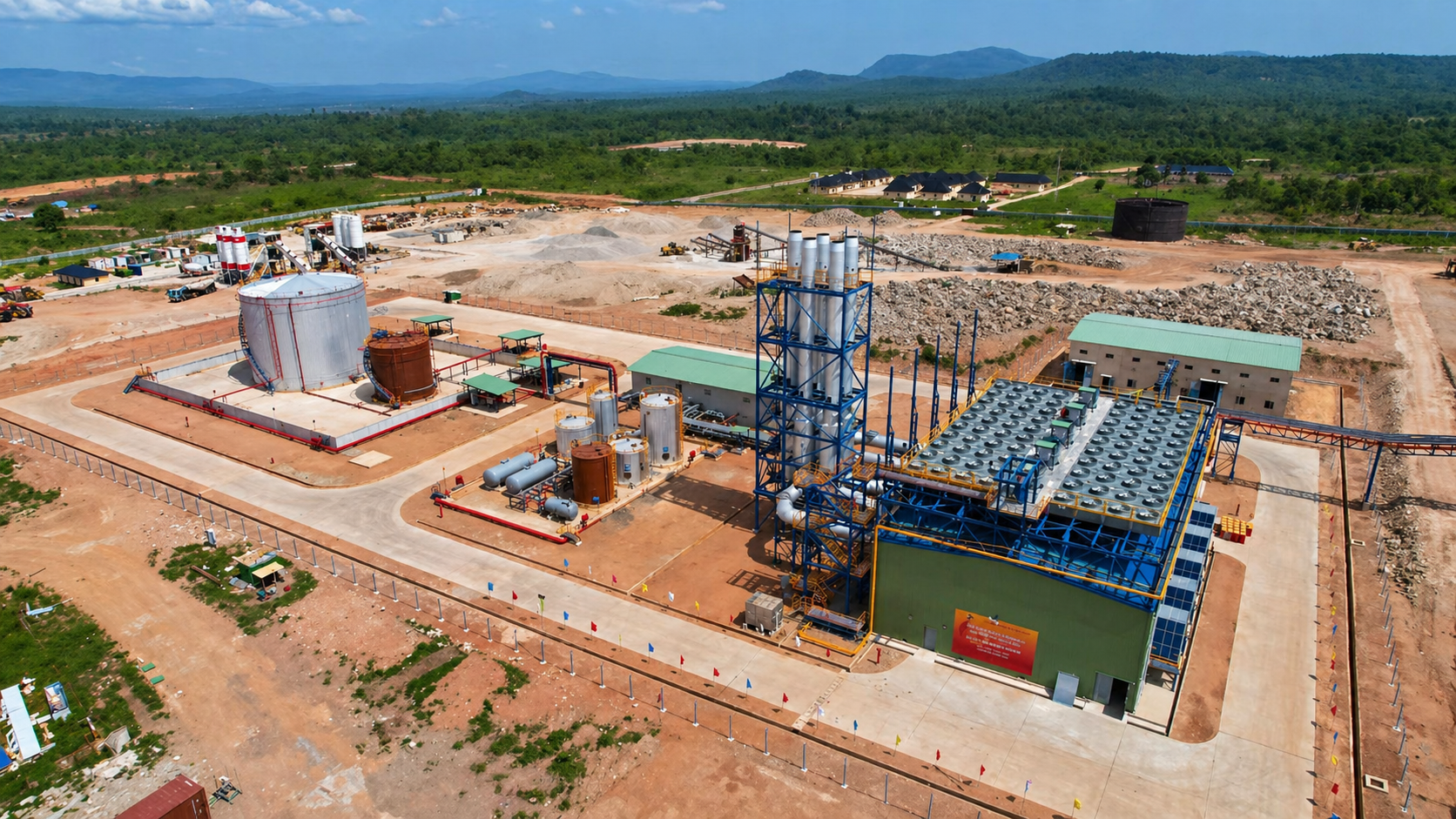
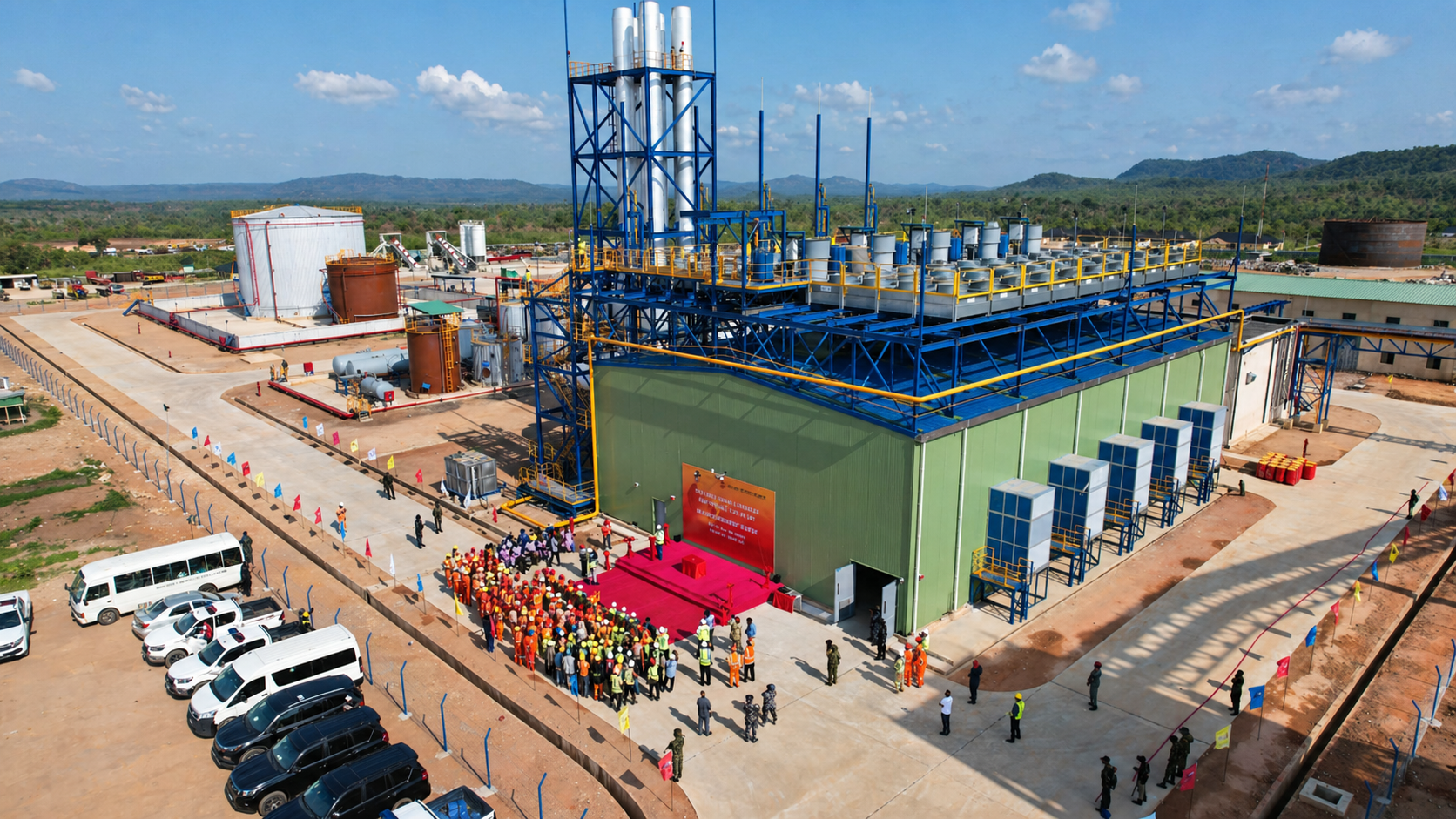
Aerial View: A Self-Contained Industrial CompoundDrone photography of the completed site reveals the full scope of the installation. The main power house — clad in VIKKINS panels — is clearly identifiable by its distinctive green steel building skin, which houses the generator hall and the elevated air-cooled radiator array mounted on a blue structural-steel frame atop the building. Flanking the power house are the fuel storage tanks (diesel and process fluids), process piping networks, a separate control building, and the high-stack exhaust system for the engine sets.
The project’s compact, well-organized site layout reflects the EPC discipline of Sinoma International Engineering, and the durable, thermally efficient building envelope provided by VIKKINS panels ensures that the sensitive generating equipment inside is protected from Kogi State’s tropical climate extremes.
As a leading rock wool panel manufacturer, VIKKINS continues to support EPC contractors with reliable building envelope solutions for industrial projects worldwide.
A Milestone for VIKKINS in the African Market
The Kogi CPP project is a significant case study in VIKKINS’ growing portfolio of steel building panels for Africa projects. Delivering high-performance building materials to sub-Saharan Africa presents a distinct set of challenges that go beyond product specification: long ocean and overland logistics chains, port congestion, high humidity during transit and storage, and the need for installation systems simple enough to be executed by locally trained crews without specialist equipment. VIKKINS panels are engineered with these realities in mind — the interlocking hidden-joint profile allows erection by semi-skilled site labour using basic tools, while the robust double-sided 0.8mm steel skin tolerates the handling conditions typical of long-distance project logistics.
The successful delivery and installation at Kogi demonstrates that VIKKINS’ supply chain is capable of supporting world-class EPC contractors at pace, meeting the tight commissioning windows that define industrial energy projects. It validates the product’s ability to perform reliably in high-heat, high-humidity tropical operating conditions — and positions VIKKINS as a proven supplier for the next generation of African industrial development.
For project developers, EPC contractors, and procurement teams evaluating industrial building cladding systems for African projects — whether power plants, cement facilities, mining infrastructure, or manufacturing complexes — the Kogi CPP stands as a concrete reference for VIKKINS’ technical capability, logistics reliability, and on-site practicality.
Key Benefits of VIKKINS Rock Wool Sandwich Panels for Industrial Applications
| Fire Resistance | Non-combustible mineral core — A1/A2 class |
|---|---|
| Thermal Performance | High R-value reduces HVAC load |
| Acoustic Dampening | Reduces generator noise transmission |
| Installation Speed | Prefabricated — fast on-site erection |
| Corrosion Protection | Concealed fasteners — no exposed fixings |
| Durability | Double-sided 0.8mm steel skin |
About VIKKINS
VIKKINS is a specialist manufacturer of energy-efficient steel building panel systems. The company’s product range includes rock wool composite sandwich panels, PIR/PUR foam insulated panels, and color-coated steel cladding systems for industrial, commercial, and clean-room applications. VIKKINS panels are exported to project markets across Southeast Asia, the Middle East, and Africa, and are regularly specified on EPC-led infrastructure and energy projects worldwide.
To enquire about VIKKINS panel specifications for your next project, contact our international sales team or visit www.vikkins.com.