










From stacked panels in the yard to commissioned chambers behind insulated sliding doors — a six-photo walkthrough of a turnkey cold storage build, and the envelope decisions that determine its running cost for the next twenty years.
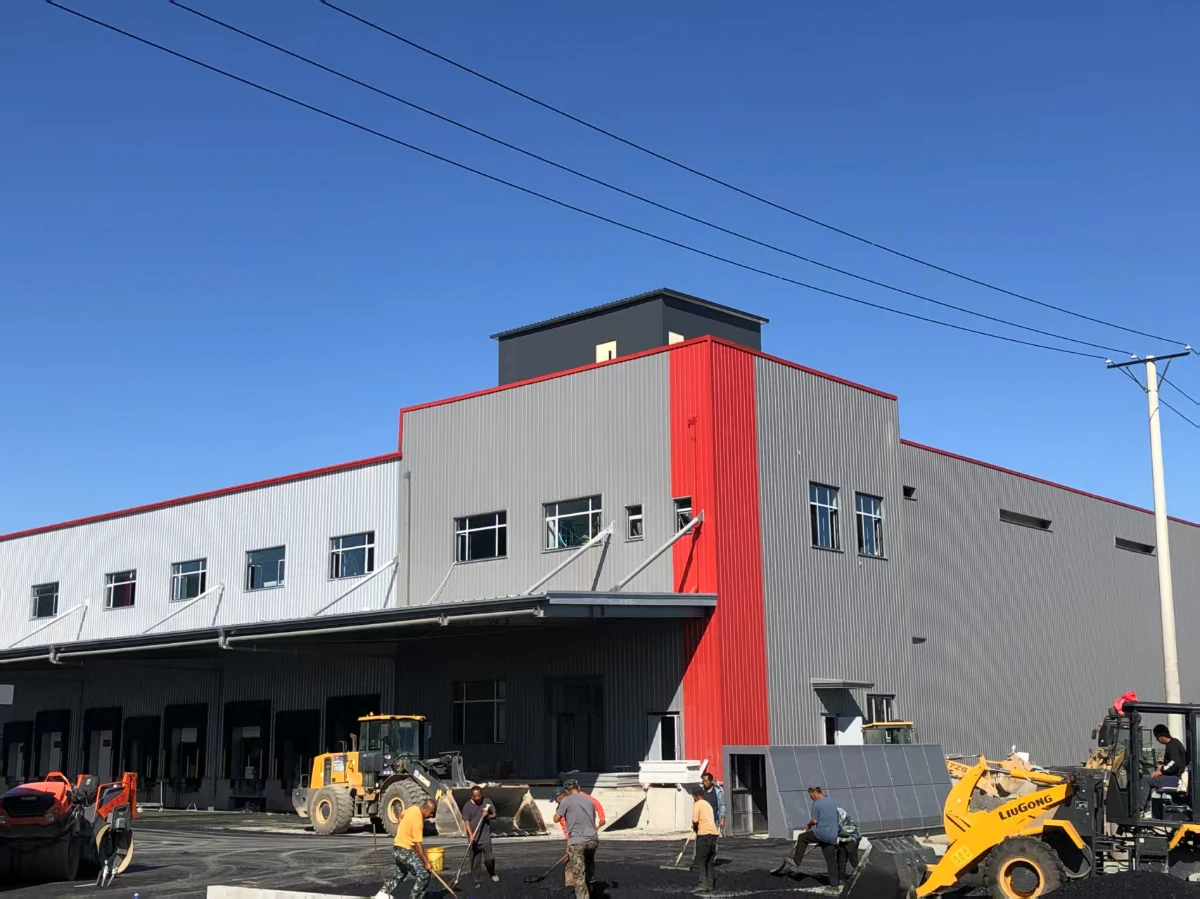
A cold store is the one building type where the envelope is not a detail — it is the product. This recently completed project shows what a complete cold storage solution looks like when it is delivered as one package: steel structure, insulated sandwich panels for every wall and ceiling, airlock vestibules, insulated sliding doors, and the refrigeration fit-out — commissioned and handed over as a working cold chain facility.
As with all client projects, we are not publishing the operator’s name, capacity or precise location. The photos themselves tell the story: a multi-chamber cold storage warehouse in northern China, with chilled and frozen rooms, a dock-side loading corridor, and the panel system that holds the temperature line.
Project snapshot
| Facility type | Multi-chamber cold store with dock-side loading corridor |
| Location | Northern China — large seasonal temperature swing, hot summers and sub-zero winters |
| Envelope | PU/PIR-core insulated sandwich panels, walls and ceilings, thickness selected per chamber temperature |
| Chambers | Multiple independent rooms with airlock vestibules and insulated sliding doors |
| Refrigeration | Ceiling- and wall-mounted unit coolers, piped to a central plant via overhead racks |
| Scope | Steel structure, panel envelope, doors, dock equipment and cold room fit-out — single-source delivery |
Why insulated sandwich panels define a cold storage solution
In a normal warehouse the structure does the work and the cladding keeps the rain out. In a cold store the logic reverses: the sandwich panel envelope does three jobs at once. It is the insulation — a continuous PU or PIR foam core with no thermal bridges. It is the room itself — panels lock edge to edge into self-supporting walls and ceilings. And it is the hygienic finish — smooth steel facings that wipe down and meet food-safety requirements without further lining.
That triple duty is why panel specification decides the economics of the whole facility. Refrigeration plant is sized against envelope losses, and electricity to run that plant is the dominant lifetime cost of any cold store. A well-sealed envelope of properly specified insulated sandwich panels is not a construction nicety; it is the difference between a facility that earns and one that leaks money at -20°C, day after day, for decades.
From stacked panels to running chambers: the build in six photos
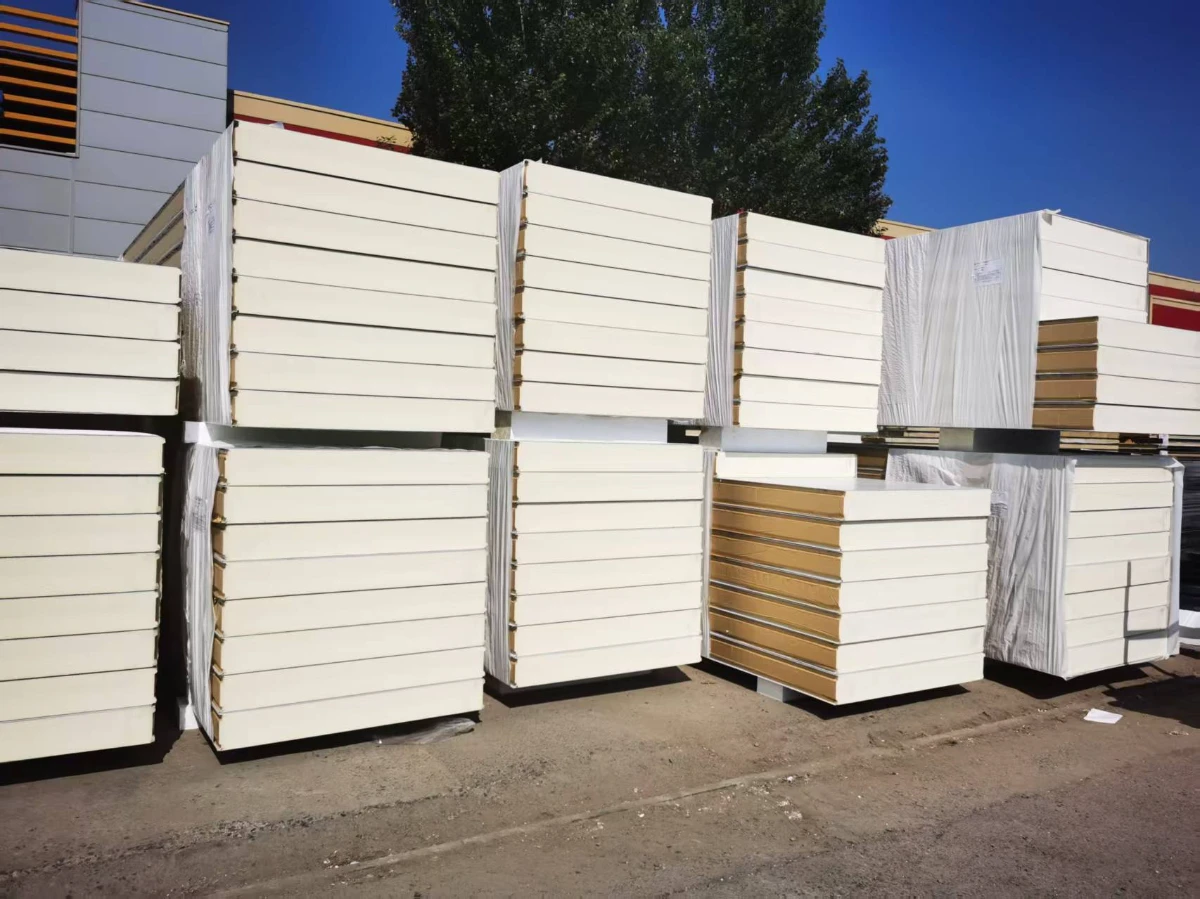
The insulated sandwich panels, ready to install
The product arrives as it will perform: factory-foamed panels with steel facings and tongue-and-groove or camlock edges, stacked and wrapped for site handling. Core thickness is chosen per room — as a rule of thumb, chiller rooms around 0°C typically use about 100 mm, while freezer rooms at -18°C and below move to 150–200 mm. Nothing is cut to fit on the ground except openings; the insulation value is built in at the factory, not assembled on site.
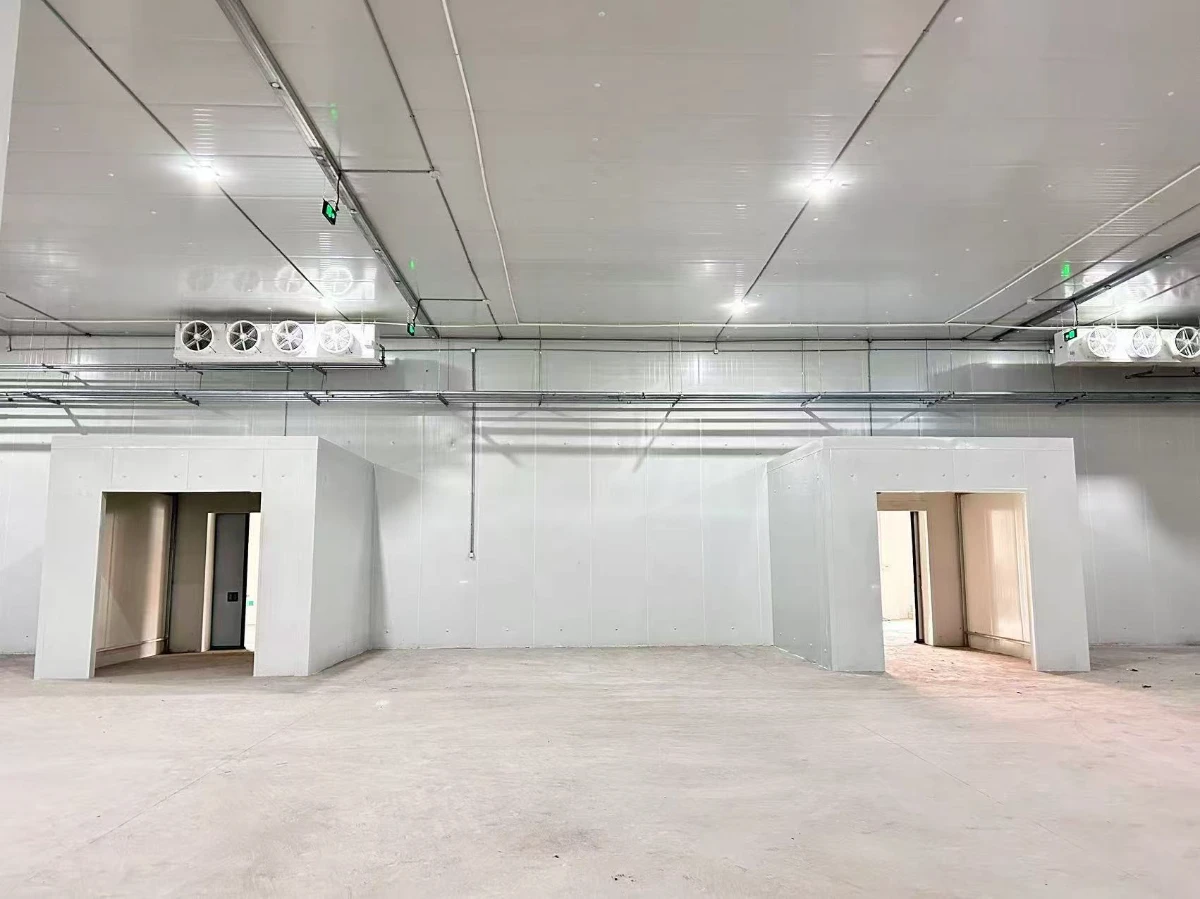
Cold room panels become chambers and airlocks
Inside the steel shell, the cold room panels go up as rooms within the room. The two enclosures in this photo are airlock vestibules — buffer spaces at chamber entrances that stop warm, humid air rushing in every time a door opens. Air exchange through doorways is one of the largest avoidable heat loads in cold storage construction, and the vestibule is the structural answer to it.
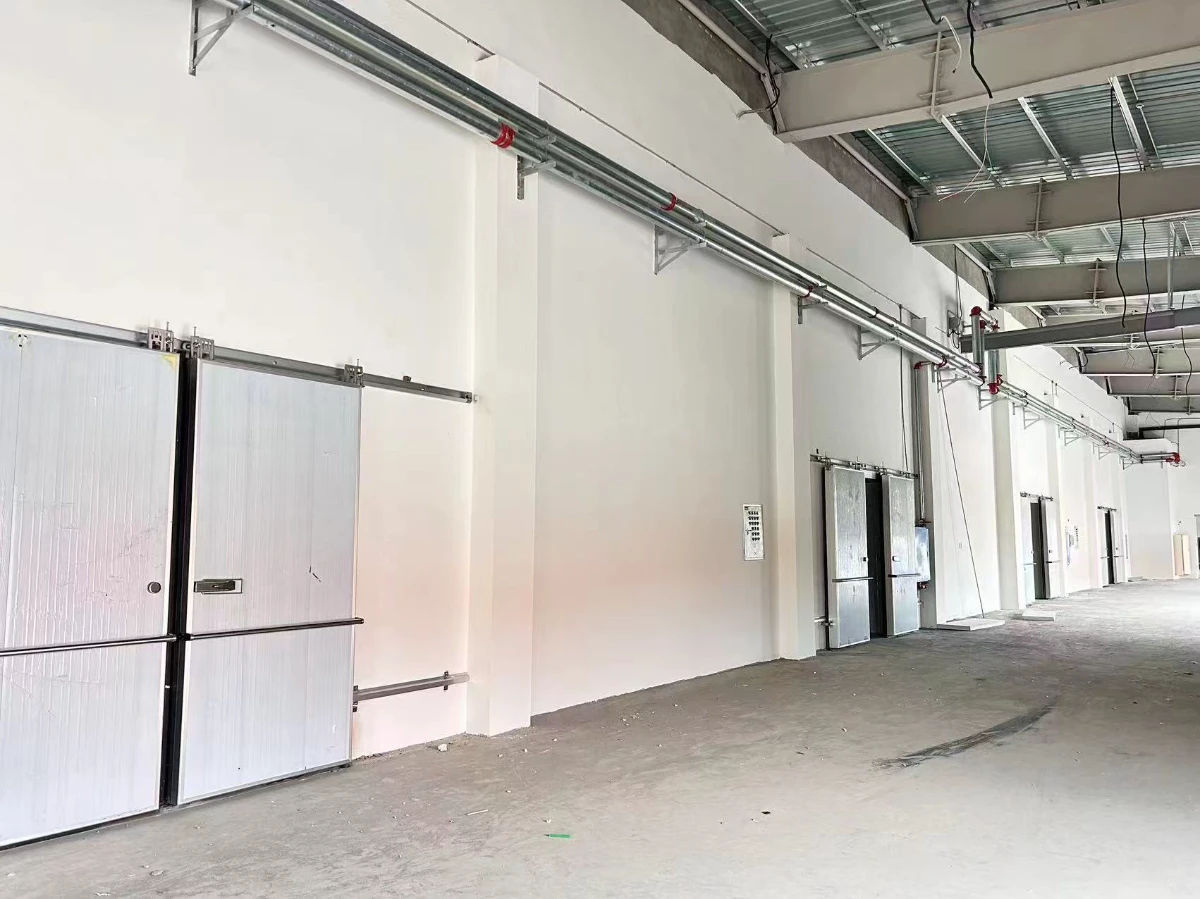
Insulated sliding doors and the refrigeration spine
Along the loading corridor, insulated sliding doors seal each chamber. Sliding rather than hinged is the standard choice at this scale: the leaf parks flat against the wall, survives forklift traffic better, and its gasket line compresses evenly against the panel face. Overhead, galvanized pipe racks carry the refrigeration lines from the plant room to every chamber — routed outside the cold envelope so that joints stay accessible for service.
Unit coolers go up
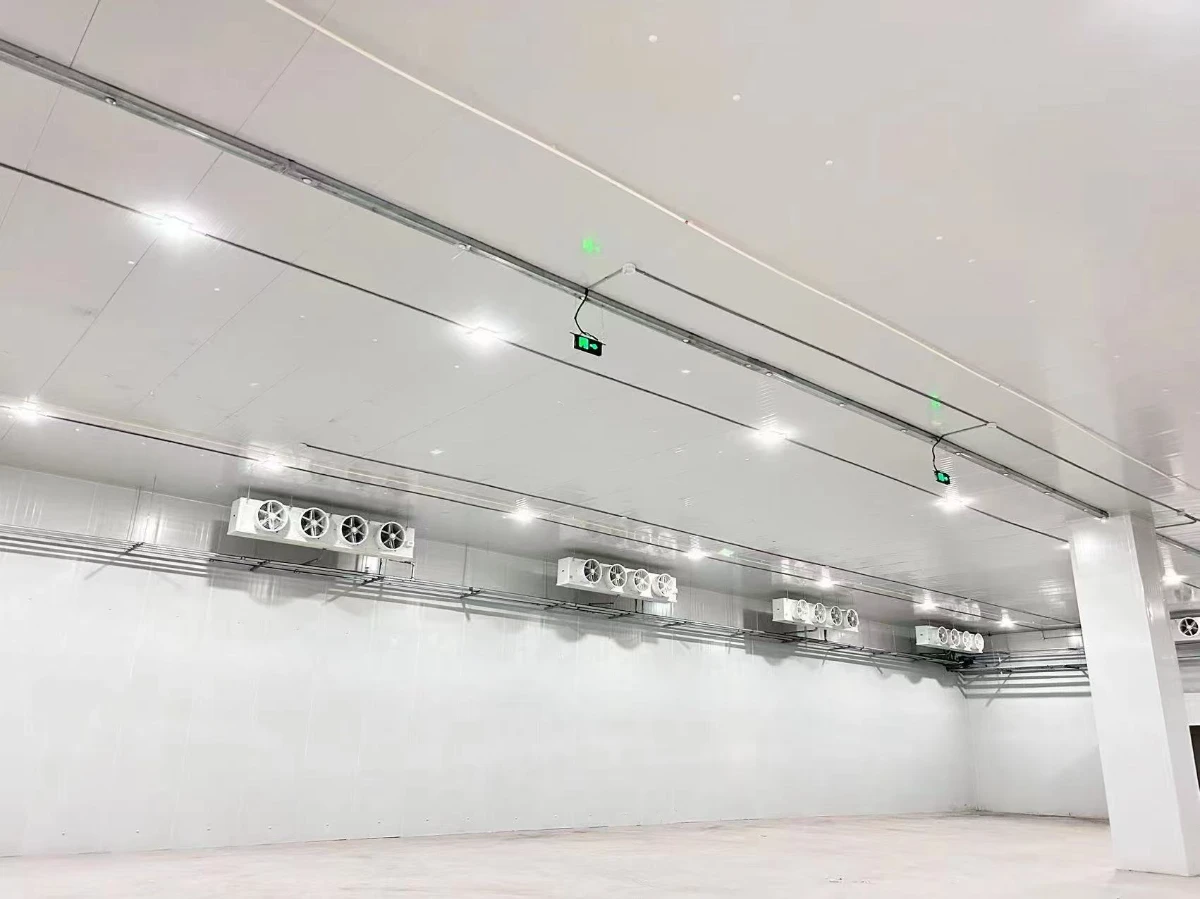
Evaporator coils — the unit coolers — mount directly to the panel walls and ceilings, which is why mounting loads are planned at the panel design stage, not discovered during fit-out. Reinforcement sits inside the panel where each unit hangs. A scissor lift and two technicians can hang a chamber’s full set in a day once the envelope is closed.
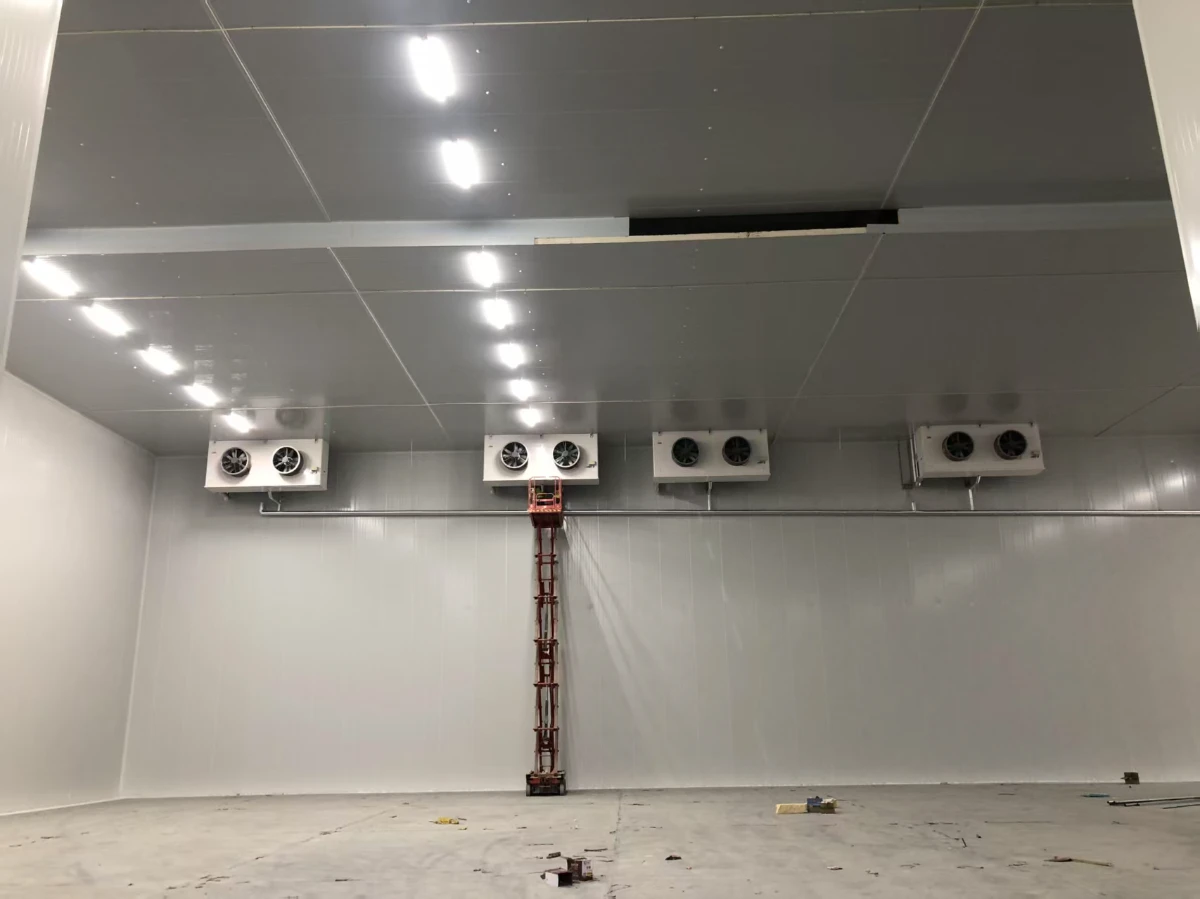
A finished chamber, ready for commissioning
The completed room shows what the system delivers: continuous white panel surfaces floor to ceiling, sealed junctions, flush lighting, emergency exits marked — a volume that can be pulled down to temperature and hold it. From here, commissioning is a matter of staged pull-down, leak checks and proving the control setpoints chamber by chamber.
The cold storage warehouse from outside
From the road, the facility reads as a clean steel-clad building — the cold storage solution is invisible from outside, which is exactly right. The visible tell is the dock line: a row of sealed loading bays with dock shelters, so refrigerated trucks couple directly to the building and the cold chain never breaks between vehicle and chamber.
Five details that decide cold storage performance
Most cold store problems trace back to a handful of envelope decisions made early. These are the ones this project got right, and the ones worth checking on any quotation you receive:
- Vapor sealing at every joint. Panel-to-panel joints, ceiling junctions and penetrations are sealed against vapor, not just air. Moisture that migrates into a freezer envelope becomes ice, and ice destroys insulation from the inside.
- The floor is part of the envelope. Freezer rooms need insulated floor build-ups — and on ground-bearing slabs, frost-heave protection beneath. A perfect wall system over an uninsulated slab is a half-finished cold store.
- Airlocks and door discipline. Vestibules, fast-acting or sliding doors, and strip curtains each cut infiltration. The cheapest refrigeration capacity is the warm air you never let in.
- Core choice is a fire decision. PU is the economical default; a PIR sandwich panel core buys significantly better fire performance for a modest premium, and rock wool cores serve where non-combustible walls are mandated. Insurers increasingly have opinions here — ask before you buy, not after.
- Hygiene is a surface property. Food-grade facings, coved internal corners and washable junction details keep the facility auditable for its whole life.
Planning a cold storage solution?
Explore our cold storage solutions and insulated sandwich panel systems, or browse more project deliveries to see the same approach across other building types.
Whether you are planning a single cold room or a multi-chamber facility like this one, the path is the same: tell us your storage temperatures, room sizes and location, and within 24 hours you will receive a preliminary panel specification and budget — thickness, core type and door schedule sized to your actual duty, no obligation. Request a free quote →
Frequently asked questions
What thickness of insulated sandwich panels does a cold room need?
As a general guide: chiller rooms operating around 0°C to +4°C typically use about 100 mm PU/PIR panels; freezer rooms at -18°C to -25°C typically use 150–200 mm. The exact specification depends on ambient conditions, door traffic and energy targets, which is why a proper cold storage solution starts from your duty cycle rather than a catalogue thickness.
How much do insulated sandwich panels cost?
As a rough ex-works reference only, PU-core cold room panels commonly fall in the range of US$15–40 per square meter depending on thickness, core type and steel facings, with PIR sandwich panel options at a modest premium over PU. Doors, corner details, flashings and installation are quoted per project. Send your room sizes and temperatures for a firm number.
PU, PIR or rock wool — which core for cold storage?
PU offers the best insulation per dollar and is the default for most cold rooms. PIR keeps nearly the same thermal performance while significantly improving fire behavior, which insurers and some codes now expect for larger facilities. Rock wool cores are specified where non-combustible construction is mandated — typically plant rooms and fire compartment walls — at the cost of thickness and weight.
Can insulated sandwich panels be installed inside an existing building?
Yes — that is exactly how this project was built: panel chambers erected as rooms within a steel shell. The same chamber-in-chamber approach converts existing warehouses into cold storage, provided the floor can be insulated and the roof structure can carry unit coolers and ceiling panels.
How fast can a cold storage warehouse be installed?
Panel erection is the fast part: a single chamber of a few hundred square meters typically closes in within one to two weeks, and a multi-chamber facility’s full envelope in a matter of weeks rather than months. Overall cold storage construction time is usually governed by the refrigeration plant lead time and commissioning, so ordering long-lead equipment early matters more than rushing the panels.